Sunday, September 21, 2014

Thursday, September 4, 2014
Three Evolutionary Proposals for Reform of the International Monetary System
Three Evolutionary Proposals for Reform of the International Monetary System
by Edwin M. Truman,
Peterson Institute for International Economics Extension of prepared remarks delivered at the Bank of Italy’s Conference in Memory of Tommaso Padoa-Schioppa. December 16, 2011
Note: In preparing these extended remarks, I have benefitted from the advice and encouragement of C. Fred. Bergsten, Andrew Crockett, Joseph Gagnon, Isabelle Mateos y Lago, and John Williamson, who are not responsible f or the views expressed.
"It is an honor and special pers onal pleasure to participate in this conference in memory of Tommaso Padoa-Schioppa....
Source: http://www.iie.com/publications/papers/truman12162011.PDF
by Edwin M. Truman,
Peterson Institute for International Economics Extension of prepared remarks delivered at the Bank of Italy’s Conference in Memory of Tommaso Padoa-Schioppa. December 16, 2011
Note: In preparing these extended remarks, I have benefitted from the advice and encouragement of C. Fred. Bergsten, Andrew Crockett, Joseph Gagnon, Isabelle Mateos y Lago, and John Williamson, who are not responsible f or the views expressed.
"It is an honor and special pers onal pleasure to participate in this conference in memory of Tommaso Padoa-Schioppa....
Source: http://www.iie.com/publications/papers/truman12162011.PDF
Tuesday, June 10, 2014
IMF - Update of the International Reserves and Foreign Currency Liquidity: Guidelines for a Data Template
Last Updated: September 11, 2013 The IMF Statistics Department, in consultation with the Reserve Assets Technical Expert Group, member countries, and other IMF departments, has prepared the updated International Reserves and Foreign Currency Liquidity: Guidelines for a Data Template (Guidelines). The Guidelines were initially released in 2001, and this update was needed to ensure consistency with the Data Template on International Reserves and Foreign Currency Liquidity (“Reserves Data Template”) itself, which was modified in 2009 as a consequence of the Executive Board’s Decision to strengthen the effectiveness of Article VIII section (5) of the Fund’s Articles of Agreement. In addition, some clarifications to the Guidelines were necessary to ensure consistency with the text of the sixth edition of the Balance of Payments and International Investment Position Manual. Some clarifications to the Guidelines were also necessary based on the IMF Statistics Department’s experience with member countries that report on the Reserves Data Template. The updated Guidelines include three new appendices. Appendix 6, “Reserve Assets and Currency Unions”, provides further methodological guidance for reserve assets in the circumstance where an economy is a member of a currency union. Appendix 7, “Frequently Asked Questions on the Characteristics of Reserve Assets”, provides information to assist countries in identifying reserve assets. Appendix 8, “Statistical Treatment of Lending to the IMF, Lending to IMF Managed Trusts, and Special Drawing Rights”, clarifies the statistical treatment in the cases where the IMF is actively engaged as a principal, manager, or administrator of positions or transactions. The updated Guidelines contribute to the IMF's initiatives to enhance data transparency among its member countries and to provide international methodological standards. They therefore support analysis and financial surveillance, and the adoption of sound macroeconomic policies. Source: http://www.imf.org/external/np/sta/ir/IRProcessWeb/dataguide.htm
Friday, June 6, 2014
Wednesday, April 16, 2014
Ch.Noyer: ...we will use every instrument within our mandate...
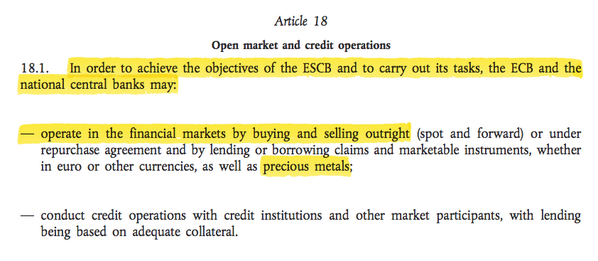
Source:
Saturday, April 5, 2014
Wednesday, March 5, 2014
HK - JY - The Future of the Monetary System of Hong Kong
The Future of the Monetary System of Hong Kong
by
Professor the Honourable Joseph Yam,
GBM, GBS, CBE, JP
Working Paper No. 9
June 2012
"...More often than not,
regrettably, without the pressures of a crisis
that is either looming large or already ongoing,
significant differences of opinion not resolved
would result in the status quo
being maintained.
Reform of the monetary system in peaceful time takes leadership,
foresight, courage and effective persuasion,..."
.
US - THE GOLD RESERVE TRANSPARENCY ACT
INVESTIGATING THE GOLD: H.R. 1495, THE GOLD RESERVE TRANSPARENCY ACT
OF 2011 AND THE OVERSIGHT OF UNITED STATES GOLD HOLDINGS
HEARING BEFORE THE SUBCOMMITTEE ON DOMESTIC MONETARY POLICY AND TECHNOLOGY OF THE COMMITTEE ON FINANCIAL SERVICES
U.S. HOUSE OF REPRESENTATIVES
ONE HUNDRED TWELFTH CONGRESS
FIRST SESSION
JUNE 23, 2011
Printed for the use of the Committee on Financial Services
Serial No. 112–41
Link: http://financialservices.house.gov/uploadedfiles/112-41.pdf
OF 2011 AND THE OVERSIGHT OF UNITED STATES GOLD HOLDINGS
HEARING BEFORE THE SUBCOMMITTEE ON DOMESTIC MONETARY POLICY AND TECHNOLOGY OF THE COMMITTEE ON FINANCIAL SERVICES
U.S. HOUSE OF REPRESENTATIVES
ONE HUNDRED TWELFTH CONGRESS
FIRST SESSION
JUNE 23, 2011
Printed for the use of the Committee on Financial Services
Serial No. 112–41
Link: http://financialservices.house.gov/uploadedfiles/112-41.pdf
Friday, February 28, 2014
FONAD - JJT - Global Imbalances and Developing Countries: Remedies for a Failing International Financial System
Forum on Debt and Development (FONDAD)
FONDAD is an independent policy research centre and forum for international
discussion established in the Netherlands. Supported by a
worldwide network of experts, it provides policy-oriented research on a
range of North-South problems, with particular emphasis on international
financial issues. Through research, seminars and publications,
FONDAD aims to provide factual background information and practical
strategies for policymakers and other interested groups in industrial,
developing and transition countries.
Director: Jan Joost Teunissen
-
Edited by
Jan Joost Teunissen and
Age Akkerman
Acknowledgements ix
Notes on the Contributors x
Abbreviations xv
I/ Introduction 1
Jan Joost Teunissen
II/ Global Imbalances and the Implications for Africa 8
Louis Kasekende
1 Why Worry About the Global Imbalances? 9
2 Global Adjustment Scenarios 11
3 Where is Africa in All These? 12
4 Conclusion 17
III/ East Asia’s Role in Resolving the New Global Imbalances 19
Masaru Yoshitomi, Li-Gang Liu and Willem Thorbecke
1 The Nature of the New Global Imbalances 20
2 The Sustainability of the New Global Imbalances 23
3 Necessary Adjustment Policies in the US 25
4 East Asia’s Role in Resolving the Current Global Imbalances 27
5 Conclusion 32
IV/ An African Perspective: Comments on Yoshitomi, Liu and
Thorbecke 37
Brian Kahn
1 The Investment-Savings Balance and Exchange Rate Policies 37
2 Systemic Crises and Concerted Action 39
3 Accumulation of Foreign Reserves 40
4 Concluding Remarks 41
V/ Rebalancing Savings-Investment Gaps in East Asia 42
Yonghyup Oh and Seeun Jeong
1 Should East Asian Capital Be Relocated Within the Region? 44
2 Barriers to Capital Market Integration in East Asia 49
3 Concluding Remarks 52
VI/ The Need for a Longer Policy Horizon: A Less Orthodox Approach 57
William R. White
1 Secular Trends 59
2 Current Exposures: Do They Warrant a Policy Response? 71
3 Towards a Domestic Macrofinancial Stabilisation Framework? 77
4 Towards an International Macrofinancial Stabilisation Framework 86
5 Conclusion 88
VII/ Global Imbalances and the Role of the IMF 93
Ariel Buira and Martín Abeles
1 The Risk Posed by Global Macroeconomic Imbalances 95
2 The Fund’s Potential Role in Dealing With Global Imbalances 109
3 A G-20 Accord and the Need for a Counter-Cyclical Facility 114
4 Conclusion 119
VIII/ Global Imbalances and the Role of the IMF: A Comment on
Ariel Buira and Martín Abeles 124
Mark Allen
IX/ The Future of the International Monetary System 128
John Williamson
X/ A More Balanced International Monetary System 133
Jane D’Arista
1 Creating a Public International Investment Fund for Emerging Economies 135
2 Reforming the International Payments System 137
XI/ Reforming the International Monetary System: Comments on
Jane D’Arista and John Williamson 141
Henk Brouwer
XII/ A Response to the Comments of Henk Brouwer 145
Jane D’Arista
Contents of the Previous Volume
Global Imbalances and the US Debt Problem: Should Developing
Countries Support the US Dollar?
I/ Should Developing Countries Support the US Dollar?
By Way of Introduction
Jan Joost Teunissen
II/ Global Imbalances and Emerging Markets
Barry Eichengreen and Yung Chul Park
III/ Global Imbalances and Latin America: A Comment on
Eichengreen and Park
Barbara Stallings
IV/ The Dilemmas and Dangers of the Build-Up of US Debt:
Proposals for Policy Responses
Jane D’Arista and Stephany Griffith-Jones
V/ Currency Asymmetry, Global Imbalances, and Rethinking of the
International Currency System
FAN Gang
VI/ China’s Macroeconomic Imbalances: The Liquidity Tango Mechanism
Wing Thye Woo
VII/ How Effective Is Monetary Policy in China? A Comment on
Woo’s “Inflationary Tango”
Zdenĕk Drábek
VIII/ Asian Monetary Coordination and Global Imbalances
Yonghyup Oh
IX/ Understanding Imbalances in a Globalised International
Economic System
Jan A. Kregel
X/ Policy Recommendations for the US, Europe and Asia:
By Way of Epilogue
Jan Joost Teunissen
Source: http://www.fondad.org/publications/global-imbalances-remedies
FONDAD is an independent policy research centre and forum for international
discussion established in the Netherlands. Supported by a
worldwide network of experts, it provides policy-oriented research on a
range of North-South problems, with particular emphasis on international
financial issues. Through research, seminars and publications,
FONDAD aims to provide factual background information and practical
strategies for policymakers and other interested groups in industrial,
developing and transition countries.
Director: Jan Joost Teunissen
-
Global Imbalances and Developing Countries Remedies for a Failing International Financial System
Edited by
Jan Joost Teunissen and
Age Akkerman
Acknowledgements ix
Notes on the Contributors x
Abbreviations xv
I/ Introduction 1
Jan Joost Teunissen
II/ Global Imbalances and the Implications for Africa 8
Louis Kasekende
1 Why Worry About the Global Imbalances? 9
2 Global Adjustment Scenarios 11
3 Where is Africa in All These? 12
4 Conclusion 17
III/ East Asia’s Role in Resolving the New Global Imbalances 19
Masaru Yoshitomi, Li-Gang Liu and Willem Thorbecke
1 The Nature of the New Global Imbalances 20
2 The Sustainability of the New Global Imbalances 23
3 Necessary Adjustment Policies in the US 25
4 East Asia’s Role in Resolving the Current Global Imbalances 27
5 Conclusion 32
IV/ An African Perspective: Comments on Yoshitomi, Liu and
Thorbecke 37
Brian Kahn
1 The Investment-Savings Balance and Exchange Rate Policies 37
2 Systemic Crises and Concerted Action 39
3 Accumulation of Foreign Reserves 40
4 Concluding Remarks 41
V/ Rebalancing Savings-Investment Gaps in East Asia 42
Yonghyup Oh and Seeun Jeong
1 Should East Asian Capital Be Relocated Within the Region? 44
2 Barriers to Capital Market Integration in East Asia 49
3 Concluding Remarks 52
VI/ The Need for a Longer Policy Horizon: A Less Orthodox Approach 57
William R. White
1 Secular Trends 59
2 Current Exposures: Do They Warrant a Policy Response? 71
3 Towards a Domestic Macrofinancial Stabilisation Framework? 77
4 Towards an International Macrofinancial Stabilisation Framework 86
5 Conclusion 88
VII/ Global Imbalances and the Role of the IMF 93
Ariel Buira and Martín Abeles
1 The Risk Posed by Global Macroeconomic Imbalances 95
2 The Fund’s Potential Role in Dealing With Global Imbalances 109
3 A G-20 Accord and the Need for a Counter-Cyclical Facility 114
4 Conclusion 119
VIII/ Global Imbalances and the Role of the IMF: A Comment on
Ariel Buira and Martín Abeles 124
Mark Allen
IX/ The Future of the International Monetary System 128
John Williamson
X/ A More Balanced International Monetary System 133
Jane D’Arista
1 Creating a Public International Investment Fund for Emerging Economies 135
2 Reforming the International Payments System 137
XI/ Reforming the International Monetary System: Comments on
Jane D’Arista and John Williamson 141
Henk Brouwer
XII/ A Response to the Comments of Henk Brouwer 145
Jane D’Arista
Contents of the Previous Volume
Global Imbalances and the US Debt Problem: Should Developing
Countries Support the US Dollar?
I/ Should Developing Countries Support the US Dollar?
By Way of Introduction
Jan Joost Teunissen
II/ Global Imbalances and Emerging Markets
Barry Eichengreen and Yung Chul Park
III/ Global Imbalances and Latin America: A Comment on
Eichengreen and Park
Barbara Stallings
IV/ The Dilemmas and Dangers of the Build-Up of US Debt:
Proposals for Policy Responses
Jane D’Arista and Stephany Griffith-Jones
V/ Currency Asymmetry, Global Imbalances, and Rethinking of the
International Currency System
FAN Gang
VI/ China’s Macroeconomic Imbalances: The Liquidity Tango Mechanism
Wing Thye Woo
VII/ How Effective Is Monetary Policy in China? A Comment on
Woo’s “Inflationary Tango”
Zdenĕk Drábek
VIII/ Asian Monetary Coordination and Global Imbalances
Yonghyup Oh
IX/ Understanding Imbalances in a Globalised International
Economic System
Jan A. Kregel
X/ Policy Recommendations for the US, Europe and Asia:
By Way of Epilogue
Jan Joost Teunissen
Source: http://www.fondad.org/publications/global-imbalances-remedies
Tuesday, January 28, 2014
OPEC - Keynote speech to the "Middle East and North Africa Energy 2014"
Delivered by HE Abdalla S. El-Badri, OPEC Secretary General, at the Chatham House Conference: Middle East and North Africa Energy 2014, Theme: 'New Uncertainties and New Opportunities', Session One: 'Gulf Region Scenarios', London, U.K, 27-28 January 2014
Source: http://www.opec.org/opec_web/en/press_room/2725.htm
Subscribe to:
Posts (Atom)